YOUR SIMPLE GROWING PLAN
One pot. Here’s the plan.
A warm, sunny patio or deck. Start with nursery start.
A draining pot with a broad, stable base; larger is fine.
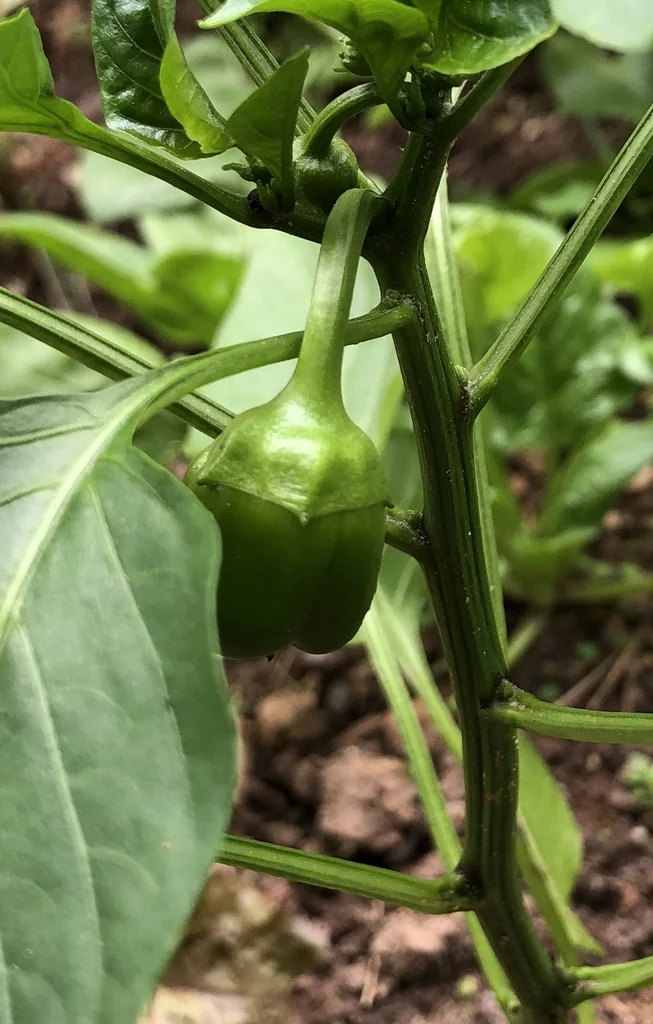
Choose a labeled sweet bell pepper; check its mature size.
- 01
Wait for warm weather
Move outside after frost risk has passed and the soil has warmed. Cold soil can leave a pepper sitting still.
- 02
Plant one pepper
Set the root ball at the same soil level as its nursery pot. Water it in and leave a watering gap below the rim.
- 03
Add a small support
Put in a cage or stake while the plant is small. Tie stems loosely as fruit develops so heavy branches have support.
- 04
Cut ripe fruit free
Use clean scissors or pruners. Pick a full-size green pepper, or leave it to reach the mature color shown on the label.
Another way to start
Grow a start from seed+
Sow indoors before the outdoor season and provide warmth and strong light. Pepper seedlings take time; for this first-container plan, a nursery start removes that extra setup. The linked seed-starting guide explains the indoor process.
When to water.
Feel the top inch each morning. If dry, water slowly at the roots until the pot drains. Check again during hot, windy afternoons. Do not let it swing repeatedly between wilted-dry and soaking wet.
Exactly what to feed it.
Do not add extra fertilizer at planting with this enriched mix. Its starter feeding is temporary; continue with one measured feed once that supply is used up.
A SPECIFIC US PRODUCT
Miracle-Gro Water Soluble All Purpose Plant Food (US 24-8-16)
Mix 1 tablespoon of the US 24-8-16 product into 1 gallon of water. Apply every 14 days during active growth after the starter feed ends. Wet the root zone and let excess drain. The full gallon is a mixing batch, not the amount one pepper must receive.
Check the manufacturer’s product page ↗Use the named US formulation. A different product or concentration needs different directions. The amount mixed is a batch, not a dose to pour into one pot.
A little patience pays off.
Many bell peppers reach a full-size green harvest roughly 70–80 days after transplanting; reaching red, yellow, or orange takes longer. Use your cultivar’s label as the closer guide.
When should I start where I live?+
This is a warm-season outdoor crop. In a short-summer area, choose an earlier variety and buy a healthy start. More fertilizer will not make cold weather suitable.
For regional planting windows, find your local Cooperative Extension office ↗.
Something looking off?
Why are flowers dropping before peppers form?+
Very hot conditions can interrupt fruit set. Check moisture and wait for more favorable weather rather than doubling the feed.
Why is there a dark sunken patch at the bottom?+
Blossom-end rot can be linked to uneven water supply. Keep moisture consistent and check drainage; a symptom alone does not justify adding calcium products.
Do I need a second plant for peppers?+
A single pepper can set fruit. Keep one plant in this pot so roots, watering, and support remain manageable.
A little more growing know-how.
Green or colored?+
A green bell pepper is generally an earlier harvest stage. Waiting for its cultivar’s ripe color changes flavor and takes extra time; not every variety turns the same color.
Support without crowding+
Leave access to the soil around the plant for checking and watering. One pepper plus a small support is the entire project; it does not need a crowded companion planting.
BEHIND THIS GUIDE
Where the advice comes from.
Plant care is based on the sources below. Planting layouts and beginner routines combine that guidance into one practical plan; they are editorial choices, not results from a Plant Care Steps growing trial.
- University of Maryland: pepper conditions and harvest stages ↗
- University of Maryland: 5-gallon pepper containers ↗
- University of Maryland: indoor seed starting ↗
- University of Minnesota: pepper planting and water stress ↗
- Manufacturer: US fertilizer formula and application directions ↗
- Manufacturer: starter feed in the named potting mix ↗
Compiled with AI assistance. These first-edition guides have not yet had an independent horticultural review. Read our editorial approach.