YOUR SIMPLE GROWING PLAN
One pot. Here’s the plan.
A sunny, airy patio or garden terrace. Start with nursery plant.
Minimum dimensions for one draining pot. A frost-resistant container helps outdoors.
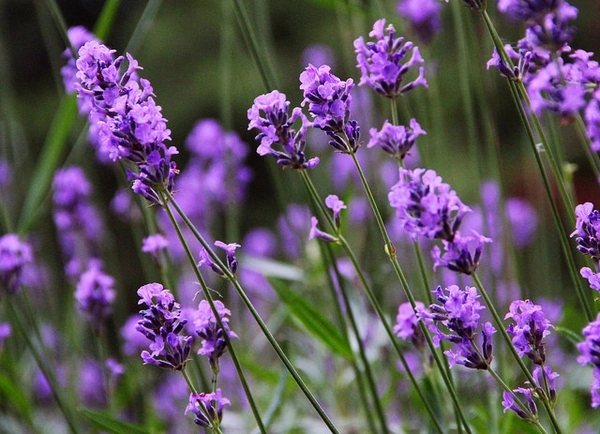
Buy English lavender ‘Hidcote’, not the larger ‘Hidcote Giant’ lavandin.
- 01
Make a freely draining mix
Combine 3 scoops of peat-free potting mix with 1 scoop of coarse horticultural grit. Repeat in that ratio until you have enough.
- 02
Plant at its old level
Keep the nursery root-ball surface at the new mix surface. Leave about 1 inch below the rim for watering.
- 03
Water, then let it drain
Water the root zone to settle the mix. Let excess escape; never leave the pot standing in a saucer of water.
- 04
Give it the sunny spot
Keep it in sun with air around the foliage. Check moisture regularly while new roots establish; do not keep topping up a still-wet pot.
Another way to start
Root a softwood cutting+
Take healthy nonflowering soft growth in spring, remove lower leaves, and root it in a freely draining propagation mix. A cutting preserves the cultivar; seed-grown lavender may differ. Start with a nursery plant for the quickest first display.
When to water.
Check daily at first and water when the mix starts drying, before the small original root ball dries completely. Once established, let the mix approach dry between thorough waterings. A dry top 1–2 inches and a noticeably lighter pot are useful clues; check deeper if unsure. Rain can mean no extra watering. Winter wet is a bigger concern than a missed calendar day.
Exactly what to feed it.
Skip extra fertilizer. The potting mix supplies the starting nutrients; lavender does not need the regular rich feeding used for many summer container flowers.
THE SIMPLE FEEDING PLAN
Start without extra fertilizer.
Do not add manure, an acidifier, or a weekly bloom feed. If growth is poor, check light, drainage, and root health first. Refresh an exhausted mix when repotting rather than stacking fertilizer onto a wet or struggling plant.
A little patience pays off.
‘Hidcote’ normally flowers in early to midsummer. A repeat flush is possible, not guaranteed. Depending on stock and conditions, allow roughly 20–36 inches in height and 2–3 ft of width, including flower stems. Its compact habit still needs space around the pot.
When should I start where I live?+
Plant in spring after the risk of severe frost. English lavender is often listed for USDA zones 5–9 in the ground, but exposed pots have less winter protection. Hot, humid regions are harder; a sunny, airy spot and excellent drainage matter.
For regional planting windows, find your local Cooperative Extension office ↗.
Something looking off?
Why is it drooping even though the pot is wet?+
Stop automatic watering and check drainage. Persistently wet roots can rot. More fertilizer is not a remedy.
Should I add acidic fertilizer?+
No. English lavender does not need an acidifying feed. Use the draining mix described here and avoid adding amendments without a reason.
Can I cut it back into bare brown wood?+
Avoid cutting into old leafless wood. After the main flowering, trim spent stems and about 1 inch of leafy green growth, leaving healthy foliage.
A little more growing know-how.
A container has its own winter+
Protect roots from severe freezing and prevent winter waterlogging. Local Extension can advise whether your pot needs sheltered overwintering; a ground hardiness zone alone is not a container guarantee.
Keep the name on the tag+
English, French, and Spanish lavenders differ in hardiness and growth. This plan is for L. angustifolia ‘Hidcote’, not every plant sold as lavender.
BEHIND THIS GUIDE
Where the advice comes from.
Plant care is based on the sources below. Planting layouts and beginner routines combine that guidance into one practical plan; they are editorial choices, not results from a Plant Care Steps growing trial.
- RHS: lavender containers, grit, feeding, and pruning ↗
- RHS: ‘Hidcote’ identity and flowering ↗
- NC State: English lavender and climate limitations ↗
- Monrovia: Hidcote Blue English lavender ↗
Compiled with AI assistance. These first-edition guides have not yet had an independent horticultural review. Read our editorial approach.