YOUR SIMPLE GROWING PLAN
One pot. Here’s the plan.
A porch with morning sun and afternoon shade. Start with nursery plant.
One draining pot for a compact wax begonia. Large Whopper or BIG types need more room.
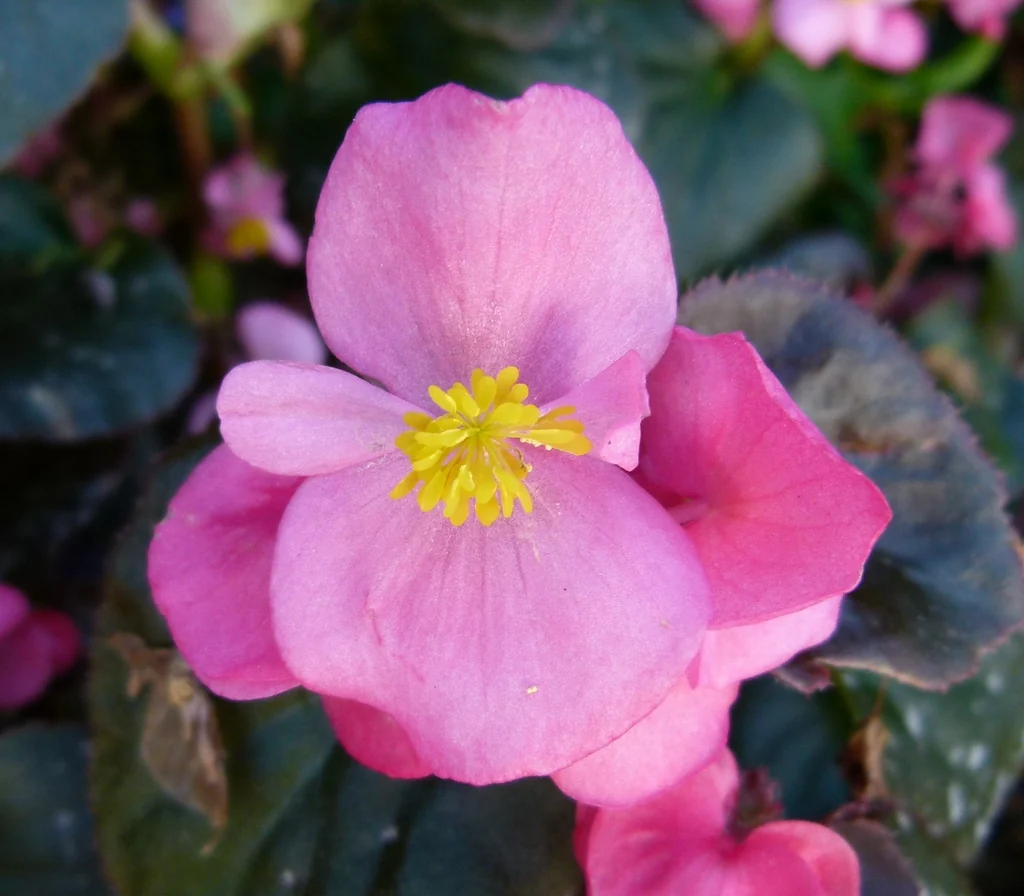
Choose a compact wax begonia, such as a Cocktail Group plant, with a mature spread around 12 inches.
- 01
Read the type on the tag
Choose “wax,” “fibrous-rooted,” or “semperflorens” begonia. A tuberous begonia, rex begonia, or large angel-wing plant needs a different plan.
- 02
Plant gently
Keep the nursery root-ball surface at the new mix surface. Handle the root ball rather than pulling on brittle stems. Leave 1 inch below the rim.
- 03
Water and shelter
Water until excess drains. Put the pot where it gets gentle light, shelter from strong wind, and space around its leaves.
- 04
Clear fallen debris
Remove mushy leaves or fallen flowers from the pot. Check moisture before adding water; do not keep its fleshy stems surrounded by wet debris.
Another way to start
Root a stem cutting+
Take a healthy 2–3-inch stem tip and remove leaves from its lower half. Put the bare lower stem in water, keeping the remaining leaves above it. Once roots develop, move it into a small draining pot of moist mix.
Start from seed well ahead+
Wax begonia seeds are tiny and seedlings grow slowly. Surface-sow indoors about 16 weeks before planting out; do not bury the seeds. For one first-time pot, a nursery plant saves months.
When to water.
Check daily in warm weather. When the upper inch begins to dry, water around the base until a little excess drains. Keep the roots lightly moist without leaving the pot in water. Morning shade and a large pot may mean several days between drinks; heat and wind can shorten that. Soft dark stems in wet mix are a reason to inspect for rot, not add more water.
Exactly what to feed it.
The named fresh mix contains starter fertilizer for up to 2 months. Do not add another fertilizer at planting. Once that feed is spent and the plant is still actively budding or flowering, use the measured feed below.
A SPECIFIC US PRODUCT
Jack’s Classic Blossom Booster (US 10-30-20)
Mix 1 level tablespoon of Jack’s Classic Blossom Booster 10-30-20 into 1 US gallon of water. Feed the root zone every 10 days after the starter nutrients run out, while buds and flowers are developing. Use only the amount needed to water the pot. Delay a feed if the mix is still wet, and do not stack it with slow-release granules or another full-rate liquid feed. Follow your package if its directions differ.
Check the manufacturer’s product page ↗A measured water-soluble feed used only after the potting mix’s starter nutrients run out. Use the specific US formula and dilution below.
A little patience pays off.
Compact wax begonias usually make a mound roughly 6–12 inches tall and wide. The small flowers can continue through the warm season. This plan gives one plant room to grow rather than packing several into a small pot.
When should I start where I live?+
Wait until frost danger has passed and conditions are warm; Minnesota Extension uses soil temperatures of at least 60°F for planting begonias outdoors. Bring a healthy plant indoors before frost if saving it. This wax type stays leafy; it does not have a tuber to dig and store dry.
For regional planting windows, find your local Cooperative Extension office ↗.
Something looking off?
Is this care plan for all begonias?+
No. This recipe is for compact wax begonias. Tuberous types have a dormant storage season, cane types can grow tall, and rex types are usually grown for patterned foliage. Start with the name on the tag.
Can it take full sun?+
Bronze-leaved wax begonias usually handle sun better than green-leaved ones, but a morning-sun, afternoon-shade spot is a forgiving first choice. Move gradually and watch for scorched leaves.
Why are stems going soft?+
Persistent wetness can cause rot. Check drainage and let a wet pot dry somewhat before watering again. Discard collapsed, rotting material; fertilizer cannot repair decayed roots.
A little more growing know-how.
Leaf care without a spray routine+
Water the mix, leave air around the foliage, and remove decaying debris. Repeatedly misting the leaves is not required and can keep the canopy damp.
Keep the plant small enough for its pot+
If the nursery tag lists a spread well above 12 inches, use a larger container or buy a compact wax type. BIG and Whopper begonias are not interchangeable with the small plant in this recipe.
BEHIND THIS GUIDE
Where the advice comes from.
Plant care is based on the sources below. Planting layouts and beginner routines combine that guidance into one practical plan; they are editorial choices, not results from a Plant Care Steps growing trial.
- NC State: wax begonia identity, compact size, and light tolerance ↗
- Minnesota Extension: begonia types, propagation, and cold sensitivity ↗
- Iowa State: checking and watering container plants ↗
- JR Peters: Blossom Booster use on begonias ↗
- Manufacturer: US fertilizer formula and application directions ↗
- Manufacturer: starter feed in the named potting mix ↗
Compiled with AI assistance. These first-edition guides have not yet had an independent horticultural review. Read our editorial approach.