YOUR SIMPLE GROWING PLAN
One pot. Here’s the plan.
A sheltered porch with bright shade. Start with nursery plant.
One draining pot gives a Beacon plant room to reach its roughly 12–14-inch spread.
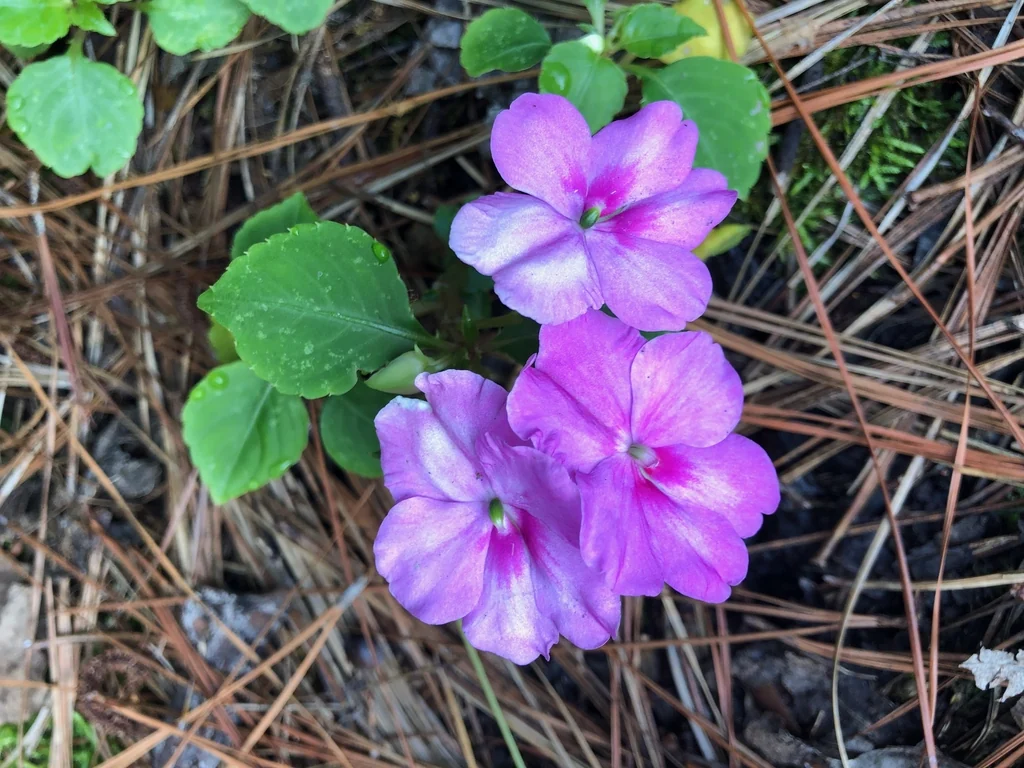
Choose a labeled Beacon Impatiens walleriana, bred for high downy-mildew resistance.
- 01
Start with a named series
Look for Beacon on the tag. It offers high resistance to impatiens downy mildew, although resistance is not immunity.
- 02
Plant without burying the stems
Set the root-ball surface level with the new mix. Leave 1 inch below the rim, then water until excess drains.
- 03
Give it bright shade
Place the pot away from hot afternoon sun and drying wind. Acclimate a greenhouse plant gradually to its outdoor home.
- 04
Make a quick daily check
Feel the mix, check the leaves, and remove fallen debris. You do not need to pick off every faded flower to keep impatiens blooming.
Another way to start
Start from purchased Beacon seed+
Use 2 seed-starting cells with 1 seed per cell around 10 weeks before planting out. Surface-sow and keep moist in light; do not bury under a deep layer. Grow seedlings in bright conditions, then keep one healthy plant for this pot. A nursery start is simpler and flowers sooner.
When to water.
Check the pot every morning and again during unusually hot or windy weather. Water as the upper inch begins to dry, before the entire root ball dries out. Apply slowly at the soil surface until water drains, then empty the saucer. Do not water a still-wet pot just because the leaves droop at midday; check moisture and shade first.
Exactly what to feed it.
Skip added fertilizer at planting with the enriched mix named here. It feeds for up to 2 months. Once that supply ends and the plant is still actively flowering, use the measured feed below.
A SPECIFIC US PRODUCT
Jack’s Classic Blossom Booster (US 10-30-20)
Mix 1 level tablespoon of Jack’s Classic Blossom Booster 10-30-20 into 1 US gallon of water. Apply at the roots every 10 days during active bud and bloom growth, after the starter nutrients run out. Use only enough solution to water the pot and let excess escape. Delay if still wet. Do not add another full-rate fertilizer, and follow your package if its directions differ.
Check the manufacturer’s product page ↗A measured water-soluble feed used only after the potting mix’s starter nutrients run out. Use the specific US formula and dilution below.
A little patience pays off.
Beacon impatiens make a mound of bright flowers and can reach about 14–18 inches tall and 12–14 inches wide. A budded nursery plant can color a shady porch quickly and continue until cold weather, with suitable moisture and care.
When should I start where I live?+
Wait until frost danger has passed and the soil has warmed above about 60°F. Impatiens are sensitive to cold. In most US gardens, treat this as a warm-season annual and replace it after frost.
For regional planting windows, find your local Cooperative Extension office ↗.
Something looking off?
Are these the impatiens that grow in full sun?+
No. This plan uses shade-loving I. walleriana. New Guinea impatiens and interspecific SunPatiens have different light tolerances. Buy the type suited to the location; the names are not interchangeable.
Does Beacon never get downy mildew?+
It has high resistance, not immunity. Pale leaves, leaf drop, and a downy coating underneath warrant a closer check. Remove badly affected plants and ask local Extension to confirm the problem; fertilizer will not cure it.
Do I have to deadhead every flower?+
No. Removing spent flowers is not needed for continued bloom. Keep fallen debris off the mix and focus on moisture, shade, and drainage.
A little more growing know-how.
Keep shade from becoming drought+
A porch roof can block rain completely. Even in shade, check the pot yourself instead of assuming a rainy day watered it.
Wilting has more than one cause+
Dry mix calls for a thorough drink. Wet mix plus wilt calls for checking drainage, roots, cold damage, or disease. A quick finger check is more useful than an automatic daily pour.
BEHIND THIS GUIDE
Where the advice comes from.
Plant care is based on the sources below. Planting layouts and beginner routines combine that guidance into one practical plan; they are editorial choices, not results from a Plant Care Steps growing trial.
- PanAmerican Seed: Beacon identity, size, and resistance limits ↗
- PanAmerican Seed: Beacon seed depth and germination ↗
- Minnesota Extension: impatiens types, warmth, moisture, and deadheading ↗
- Iowa State: container moisture and feeding ↗
- JR Peters: Blossom Booster for impatiens ↗
- Manufacturer: US fertilizer formula and application directions ↗
- Manufacturer: starter feed in the named potting mix ↗
Compiled with AI assistance. These first-edition guides have not yet had an independent horticultural review. Read our editorial approach.