YOUR SIMPLE GROWING PLAN
One pot. Here’s the plan.
A sunny patio with a securely anchored support. Start with nursery plant.
One large pot with drainage, plus a separate, securely anchored 6-ft support.
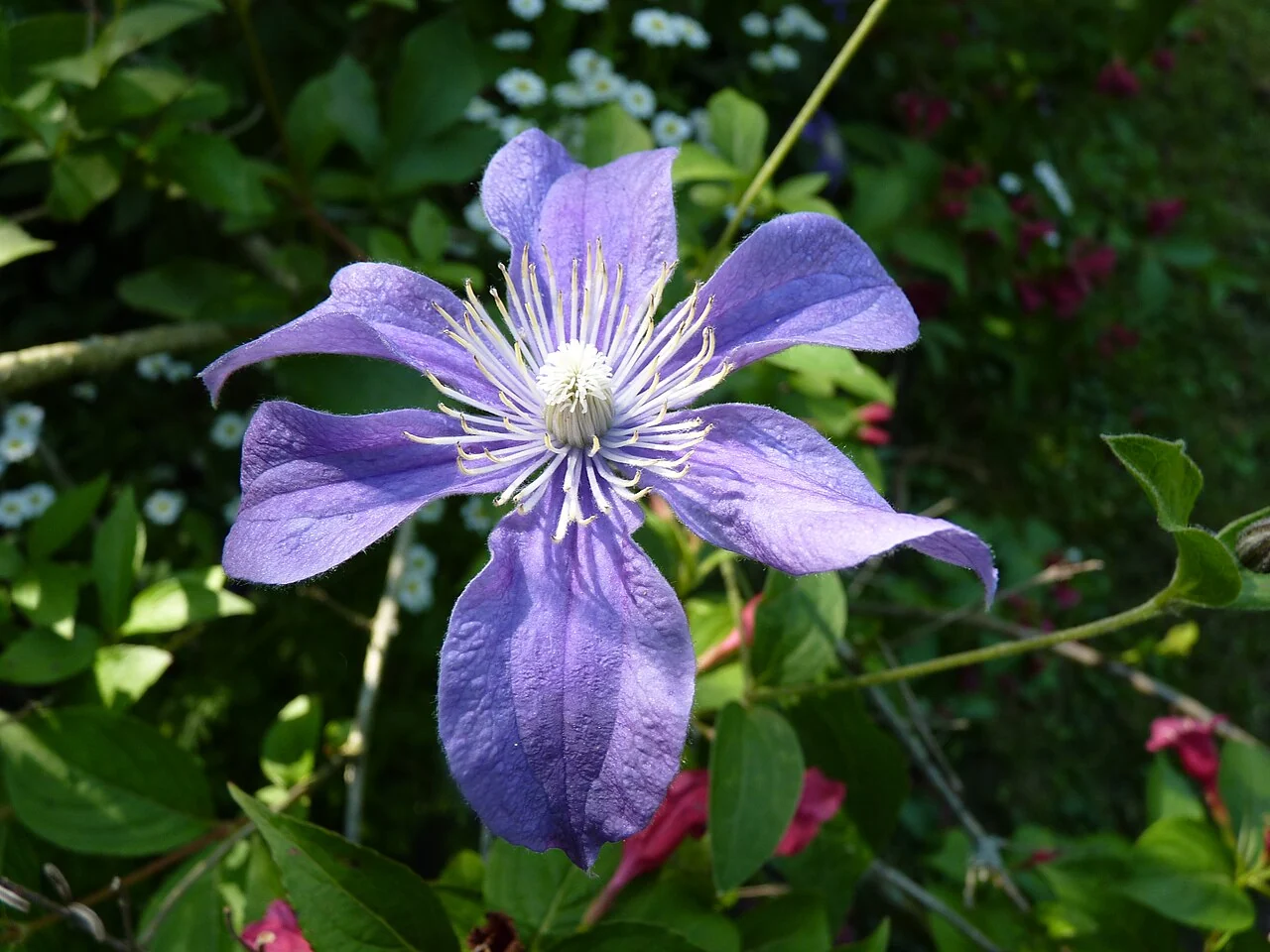
Buy blue-purple ‘Arabella’, a non-clinging Group 3 clematis. White Arabella is different.
- 01
Set up the support first
Anchor the trellis so wind cannot pull over the pot. Leave access to the mix for watering. Shade the pot’s sunny side with another container while keeping the shoots in sun.
- 02
Keep this crown at the surface
Fill with moist potting mix and set ‘Arabella’ with its crown at the mix surface. Leave 1 inch below the rim for watering. Do not borrow the deep-burial rule for large-flowered climbing clematis.
- 03
Water the whole root ball
Water slowly until excess drains. Check the original nursery root ball as well as the surrounding mix over the first few weeks.
- 04
Tie new stems loosely
Guide stems up the support and add loose ties as they lengthen. ‘Arabella’ does not grip a trellis by itself; leave room for stems to thicken.
Another way to start
Plant the same cultivar in a garden bed+
Allow about 3 ft of width beside a support or a low shrub it can scramble through. Keep the crown at ground level in fertile, well-drained soil. An established plant in fertile garden soil does not need the container feeding schedule.
Make another plant by layering+
On an established plant, pin a low healthy shoot into a small pot of moist propagation mix while it remains attached. Separate only after it has rooted. A labeled nursery plant is quicker than seed and preserves the cultivar.
When to water.
Check every morning during active growth. When the upper inch starts to dry, slowly water until drainage begins. Empty the saucer. In hot or windy weather, check again later; in cool wet weather, wait. Do not let the whole root ball become dry. A dormant winter pot needs much less water, but its roots should not desiccate.
Exactly what to feed it.
Do not add plant food at planting with the enriched mix named here. It supplies nutrients for up to 2 months. After that, feed only while the clematis is making active spring or summer growth.
A SPECIFIC US PRODUCT
Miracle-Gro Water Soluble All Purpose Plant Food (US 24-8-16)
Use US Miracle-Gro Water Soluble All Purpose Plant Food 24-8-16: dissolve 1 level tablespoon in 1 US gallon of water, equivalent to the manufacturer’s 1½ tablespoons in 1½ gallons. Apply at the roots every 14 days after the starter feed ends, using only enough solution for a normal thorough watering. Wait if the pot is still wet. Stop during winter dormancy and do not add a second full-rate fertilizer.
Check the manufacturer’s product page ↗A measured water-soluble feed used only after the potting mix’s starter nutrients run out. Use the specific US formula and dilution below.
A little patience pays off.
‘Arabella’ has blue-purple flowers that fade toward mauve and pale blue. Monrovia lists trained growth around 3–6 ft tall and 2–3 ft wide; other growing conditions can produce longer stems. Expect summer into early fall color once established, rather than an instant wall of flowers.
When should I start where I live?+
Plant in moderate spring or early-fall weather. Monrovia lists USDA zones 4–9 for this cultivar in the ground. Roots in an exposed pot freeze more readily: in cold-winter areas, arrange a sheltered overwintering place or sink the pot into the ground before hard freezing.
For regional planting windows, find your local Cooperative Extension office ↗.
Something looking off?
When do I prune this clematis?+
‘Arabella’ belongs to pruning Group 3. In late winter or early spring, cut old stems back to about 6–12 inches above the mix, just above healthy buds. Remove dead stems carefully and protect new basal shoots.
Why will it not climb by itself?+
That is normal for ‘Arabella’. It scrambles rather than clinging. Tie stems loosely to the support, or let them grow through a low shrub.
Can I use this pruning plan for any clematis?+
No. Spring-flowering Group 1 and many early-flowering Group 2 cultivars need different treatment. Keep the nursery name and pruning group; hard cutting the wrong plant can remove its coming flowers.
A little more growing know-how.
Two similar names, different plants+
Blue-purple ‘Arabella’ is an Integrifolia Group plant with non-clinging stems. The white-flowered cultivar sold as White Arabella is not the same plant and has a different pruning recommendation.
Keep the pot healthy year after year+
In spring, refresh the upper layer of old mix without damaging the crown. When roots fill the container and watering becomes difficult, move up a pot size or plant into a garden bed. Check drainage before adding fertilizer to a struggling plant.
BEHIND THIS GUIDE
Where the advice comes from.
Plant care is based on the sources below. Planting layouts and beginner routines combine that guidance into one practical plan; they are editorial choices, not results from a Plant Care Steps growing trial.
- Monrovia: Arabella size, US zones, watering, and Group 3 pruning ↗
- RHS: Arabella identity, crown depth, and propagation ↗
- RHS: clematis containers, roots, and feeding ↗
- RHS: Group 3 pruning ↗
- RHS: White Arabella is a different Group 2 cultivar ↗
- Manufacturer: US fertilizer formula and application directions ↗
- Manufacturer: starter feed in the named potting mix ↗
Compiled with AI assistance. These first-edition guides have not yet had an independent horticultural review. Read our editorial approach.