YOUR SIMPLE GROWING PLAN
One pot. Here’s the plan.
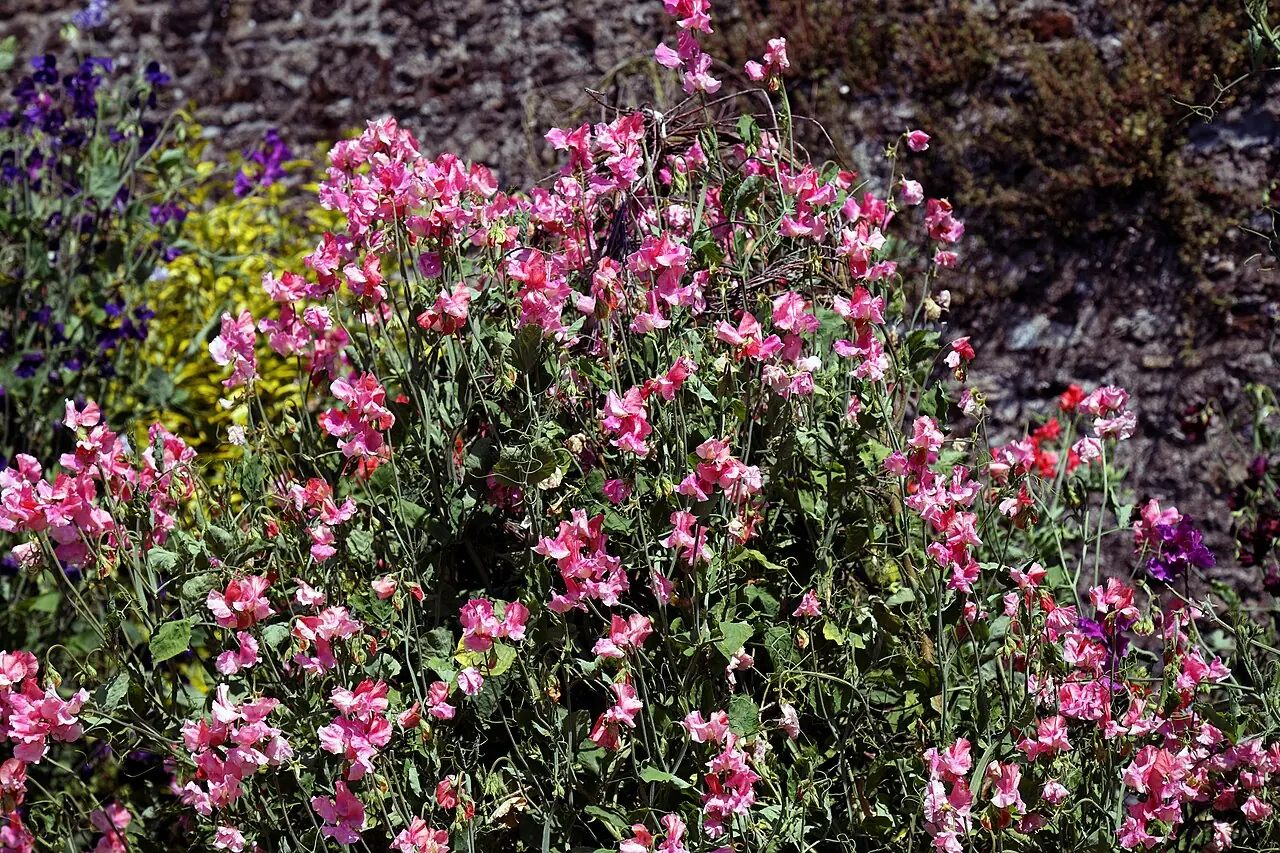
A sunny outdoor pot with a securely anchored trellis. Start with seeds.
About 20 inches wide × 15½ inches tall, plus a separate 6-ft trellis above the soil.
Sow 2 seeds at each of 3 spots, 8 inches apart. Keep 1 plant at each spot.
- 01
Secure the climbing frame
Anchor the trellis behind the pot before sowing. A fabric pot alone will not hold a tall trellis steady in wind.
- 02
Sow three pairs
Make 3 planting spots in a triangle, 8 inches apart, within reach of the support. Sow 2 seeds per spot, ½ inch deep, and water gently.
- 03
Keep the strongest three
Keep the seed zone lightly moist. After true leaves appear, snip the weaker seedling at each spot, leaving 3 plants.
- 04
Help the vines climb
Guide shoots to the trellis with loose ties. Pinch the growing tip once at 6–8 inches tall for branching. Pick flowers regularly before large seedpods form.
Another way to start
Use three nursery seedlings+
Plant 3 young sweet-pea starts at the same 8-inch spacing. Keep each at its former soil level and disturb the roots as little as possible. Introduce greenhouse-grown seedlings gradually to outdoor conditions.
When to water.
While seeds sprout, keep their shallow planting zone moist with gentle watering. Once established, check daily and water when the top inch begins to dry. Soak the root zone and let excess escape. Keep roots evenly moist, but do not leave the pot standing in water.
Exactly what to feed it.
The named fresh mix includes starter nutrients for up to 2 months. Do not add another full feeding program at sowing. As the mix’s starter nutrients run out and flower buds become visible, use the measured feed below.
A SPECIFIC US PRODUCT
Jack’s Classic Blossom Booster (US 10-30-20)
Mix 1 level tablespoon of Jack’s Classic Blossom Booster 10-30-20 per 1 US gallon of water. Apply at the roots every 10 days while buds form and flowers open, after the starter feed ends. Use only the amount the pot needs at a normal watering; delay if still wet. Do not combine with another full-rate feed. Follow the purchased package if its directions differ.
Check the manufacturer’s product page ↗Use the named US formulation. A different product or concentration needs different directions. The amount mixed is a batch, not a dose to pour into one pot.
A little patience pays off.
The supplier estimates about 75–85 days from sowing for this mix, with vines about 5–6 ft tall. Conditions change that timing. Cool weather supports a longer display; summer heat can finish this annual.
When should I start where I live?+
In cold-winter regions, start for cool spring growth; established seedlings tolerate light frost. In mild areas where the ground does not freeze, fall sowing can give spring flowers. Midsummer sowing is not a nationwide default.
For regional planting windows, find your local Cooperative Extension office ↗.
Something looking off?
Are these the peas I can eat?+
No. Lathyrus odoratus is an ornamental sweet pea. Its seeds, pods, and other parts are poisonous; never harvest them as edible peas.
Flowers slowed down as summer got hot.+
Sweet peas prefer a cool growing season. Keep roots moist, but do not try to reverse normal heat decline with extra fertilizer.
I see lots of pods and fewer flowers.+
Remove developing pods and resume regular flower picking or deadheading. Plants putting energy into seed can stop flowering sooner.
A little more growing know-how.
One small daily visit+
Check moisture, guide stray shoots, and loosen tight ties. Picking a few flowers for a vase also removes blooms before they make pods.
An annual, not a permanent vine+
This is fragrant annual L. odoratus, not perennial L. latifolius. Remove exhausted vines and start fresh in the next suitable cool season.
BEHIND THIS GUIDE
Where the advice comes from.
Plant care is based on the sources below. Planting layouts and beginner routines combine that guidance into one practical plan; they are editorial choices, not results from a Plant Care Steps growing trial.
- Johnny’s: Mammoth Choice Mix height, flowering estimate, and safety ↗
- Johnny’s: sowing, spacing, and pinching ↗
- Renee’s Garden: US timing and transplanting ↗
- RHS: sweet-pea container care ↗
- Maryland Extension: container care ↗
- Johnny’s: example planter dimensions ↗
- Manufacturer: US fertilizer formula and application directions ↗
- Manufacturer: starter feed in the named potting mix ↗
Compiled with AI assistance. These first-edition guides have not yet had an independent horticultural review. Read our editorial approach.