YOUR SIMPLE GROWING PLAN
A garden bed. Here’s the plan.
A sunny garden bed with room for tall stems. Start with seeds.
Three planting positions, 36 inches apart, centered across the bed.
Sow 3 seeds at each of 3 spots; thin to 1 plant per spot.
- 01
Give tall flowers room
In a 9 × 3 ft sunny bed, mark 3 positions along the centerline: 1½, 4½, and 7½ ft from one end.
- 02
Press seeds onto the surface
For this specific Indian Spring packet, press 3 seeds into the surface at each spot. Do not bury them under a deep layer of soil. Gently water.
- 03
Thin to three plants
Keep the seed zone lightly moist. When seedlings are about 3 inches tall, snip extras so one healthy plant remains at each spot.
- 04
Support before stems lean
Add stakes early if the site is exposed, keeping them away from the roots. Tie tall stems loosely and water at ground level.
Another way to start
Buy three nursery starts+
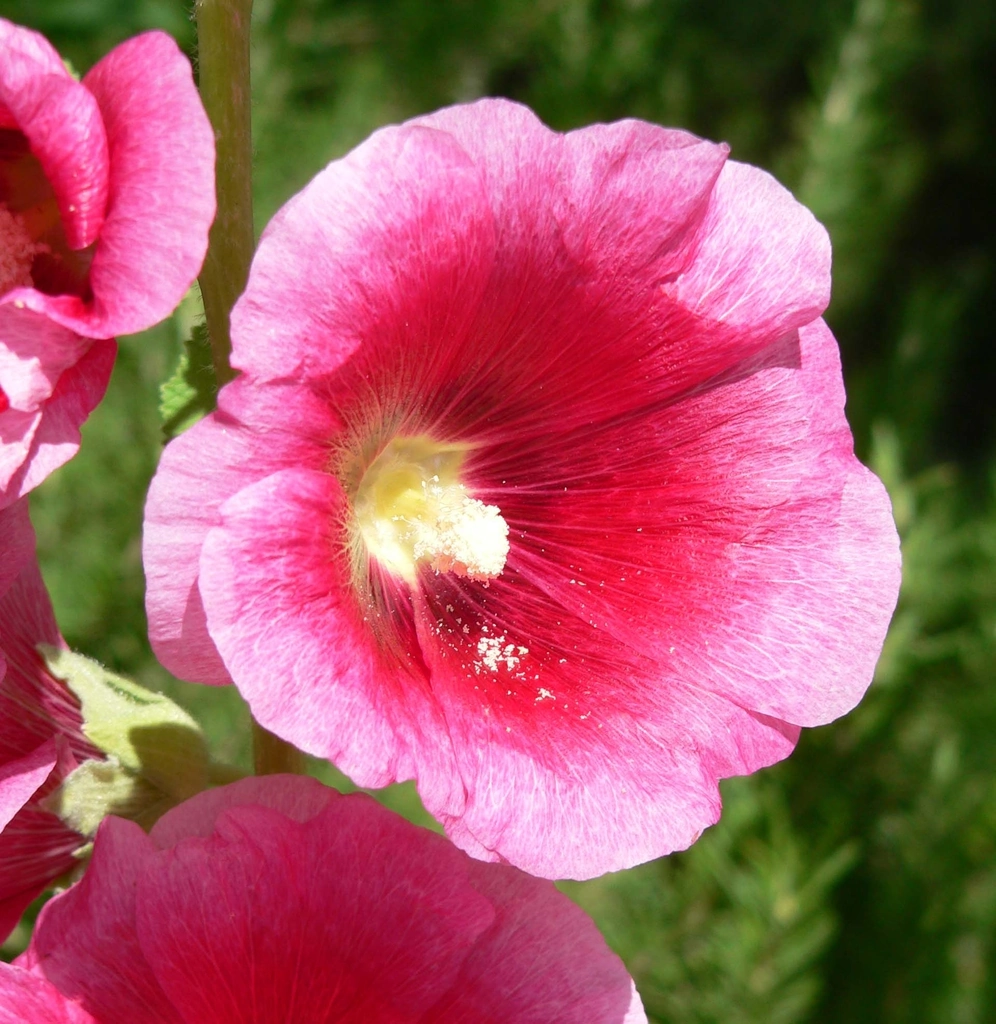
Choose single-flowered hollyhock plants. Keep their taproots intact and plant at the existing soil level with the same 36-inch spacing. A nursery plant may shorten the wait, but check its age and flowering stage.
When to water.
Keep the seed surface moist until germination. For established seedlings, check below the surface and water slowly when the upper root-zone soil begins to dry. Young plants need closer attention than established clumps. Water the ground instead of spraying leaves, and skip watering if the soil is already wet.
Exactly what to feed it.
Start without a weekly liquid feed. Where the bed needs organic matter, use compost; a 1-inch spring top-dressing is an option around established plants, kept clear of the crowns.
THE SIMPLE FEEDING PLAN
Start without extra fertilizer.
Do not buy a bloom booster automatically. Follow a soil fertility test if nutrients are lacking. More fertilizer does not cure rust, replace sun, or guarantee first-year flowers.
A little patience pays off.
Indian Spring gives single flowers on stems about 5–8 ft tall. First-year flowers are possible with this cultivar, but allow until the second summer. The packet estimates germination in about 10–14 days under suitable conditions.
When should I start where I live?+
For this packet, direct sow 1–2 weeks after the local average last frost, or about 2 months before the first fall frost. Use local dates and actual weather rather than a fixed nationwide month.
For regional planting windows, find your local Cooperative Extension office ↗.
Something looking off?
There are rusty bumps under the leaves.+
Hollyhock rust often makes yellow/orange spots above and rusty bumps below. Remove affected leaves early, discard diseased debris, keep airflow open, and avoid overhead watering.
Why are my flower stems leaning?+
Check wind exposure and support. Tie stems loosely to stakes early, and make sure the plants receive enough sun.
No flowers in the first summer?+
That can be normal. Indian Spring can flower early, but the species is often biennial. Allow a second season before blaming a nutrient shortage.
A little more growing know-how.
Keep rust from building up+
Remove dead stems and leaves at season’s end; the rust fungus can overwinter in infected debris. Remove heavily affected plants when needed. No cultivar should be described as completely immune.
A changing patch, not a forever clump+
Hollyhocks are short-lived and may self-seed. Remove faded spikes if you do not want seedlings. Replace tired plants deliberately and keep this planting ornamental.
BEHIND THIS GUIDE
Where the advice comes from.
Plant care is based on the sources below. Planting layouts and beginner routines combine that guidance into one practical plan; they are editorial choices, not results from a Plant Care Steps growing trial.
- Botanical Interests: Indian Spring sowing depth, timing, and size ↗
- NC State: hollyhock habit and growth ↗
- RHS: hollyhock care and support ↗
- Wisconsin Extension: hollyhock rust and soil-test-led feeding ↗
- Maryland Extension: caring for garden flowers ↗
Compiled with AI assistance. These first-edition guides have not yet had an independent horticultural review. Read our editorial approach.