YOUR SIMPLE GROWING PLAN
One pot. Here’s the plan.
A sunny patio or balcony with good drainage. Start with nursery plant.
At least 10 inches wide and 8 inches deep, with drainage.
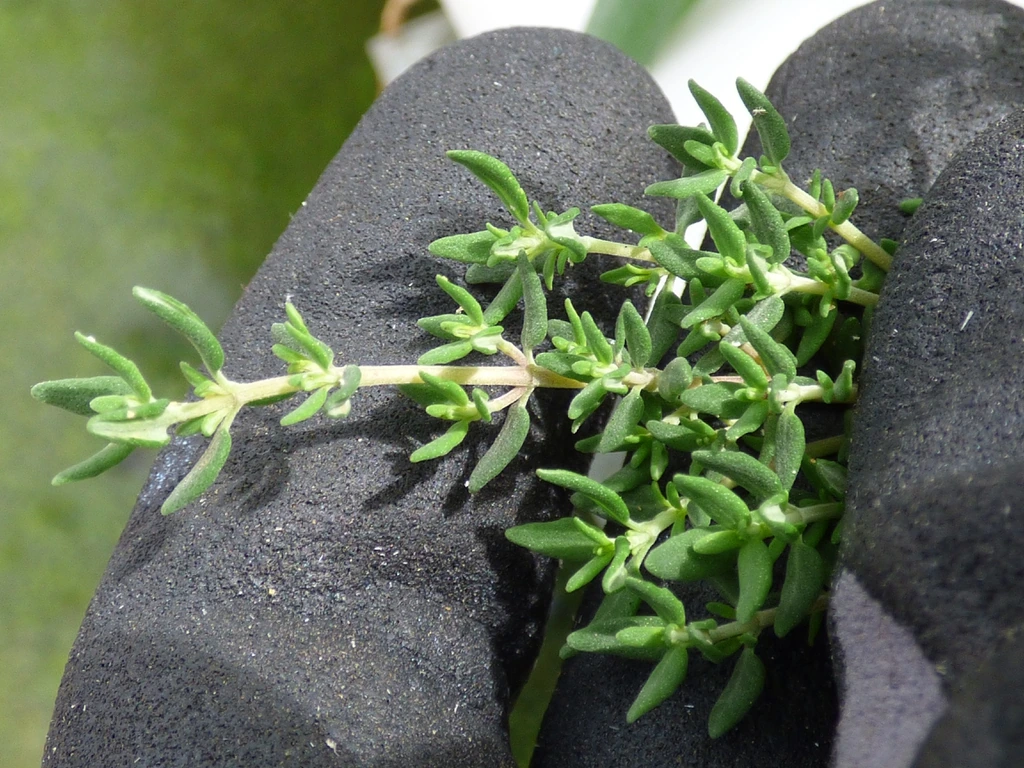
Buy culinary common or German thyme, labeled Thymus vulgaris.
- 01
Choose a cooking thyme
Look for Thymus vulgaris on the label. A rooted nursery plant is the quickest route to a few kitchen sprigs.
- 02
Plant at the same level
Dampen the mix and set the root-ball surface level with it. Keep the woody stem base uncovered and water the plant in.
- 03
Let the surface dry a little
Place the pot in sun. Check before watering again; do not leave the pot sitting in a full saucer.
- 04
Take soft leafy tips
After new growth begins, snip a few tender tips above leafy growth. Leave most of the plant and avoid cutting back into bare wood.
Another way to start
Start slowly from seed+
Sow 6 seeds across a small 3-inch starter pot. Press gently and cover only with a very light dusting of mix, no more than 1⁄16 inch. Keep the surface damp in good light. At four true leaves, keep the strongest seedling and snip extras; move it up as its roots fill the pot. Seed-grown thyme takes longer than a nursery plant.
When to water.
Check daily outdoors at first. For an established plant, wait until the top inch is dry and the pot feels lighter, then water thoroughly and let excess drain. A seed pot needs a moist surface instead. Do not turn drought tolerance into weeks of neglect in a small hot container.
Exactly what to feed it.
Start with no extra fertilizer while fresh enriched mix supports healthy growth. Thyme is a light feeder; pale leaves in soggy mix are a reason to check the roots, not immediately add plant food.
A CONDITIONAL TOP-UP, NOT A WEEKLY ROUTINE
Miracle-Gro Water Soluble All Purpose Plant Food (US 24-8-16)
After the bag’s starter feed ends, if growth remains weak after checking light and watering, mix 1½ teaspoons of the US 24-8-16 product per gallon of water. Apply once at the roots and reassess in 4–6 weeks. This uses Minnesota’s half-strength outdoor herb dilution with a conservative schedule for a light feeder. Use only enough to wet the pot and drain.
Check the manufacturer’s product page ↗Use the named US formulation. A different product or concentration needs different directions. The amount mixed is a batch, not a dose to pour into one pot.
A little patience pays off.
An established nursery plant can supply small snips after fresh growth appears. Seeds often take 14–21 days to germinate in suitable warmth, followed by a slow start. Keep early harvests small.
When should I start where I live?+
Set a tender new nursery plant outdoors after frost danger. Winter survival varies with cultivar, climate, and how exposed the pot is; a container is less protected than garden soil.
For regional planting windows, find your local Cooperative Extension office ↗.
Something looking off?
Why is it yellow and wilting in wet mix?+
Check drainage and empty the saucer. Roots can suffer when they stay wet. Wait before watering again and do not use fertilizer as the first fix.
Can I cut the bare woody center right back?+
For routine harvests, cut above healthy leafy growth. An exhausted woody plant may be easier to replace than to restore by cutting into leafless stems.
Why are the stems thin and stretched?+
Check whether it is getting enough direct light. A bright-looking kitchen counter may still be too dim for compact growth.
A little more growing know-how.
Common thyme, not every thyme+
This is a cooking-herb plan for Thymus vulgaris. Creeping ornamental thymes and lemon-scented types have different habits or flavors; read the label before buying.
Keep harvesting simple+
Take a small sprig, then strip the leaves from tougher stems for cooking. Leave enough foliage to support the next flush of growth.
BEHIND THIS GUIDE
Where the advice comes from.
Plant care is based on the sources below. Planting layouts and beginner routines combine that guidance into one practical plan; they are editorial choices, not results from a Plant Care Steps growing trial.
- University of Minnesota: light feeding and dry-loving herbs ↗
- Iowa State: growing herbs in containers ↗
- Johnny’s Selected Seeds: German Winter thyme seed starting ↗
- Bonnie Plants: thyme planting, harvest, and common problems ↗
- Manufacturer: US fertilizer formula and application directions ↗
- Manufacturer: starter feed in the named potting mix ↗
Compiled with AI assistance. These first-edition guides have not yet had an independent horticultural review. Read our editorial approach.