YOUR SIMPLE GROWING PLAN
One pot. Here’s the plan.
An open, sunny patio with good airflow. Start with nursery start.
At least 12 inches deep; choose a compact cultivar.
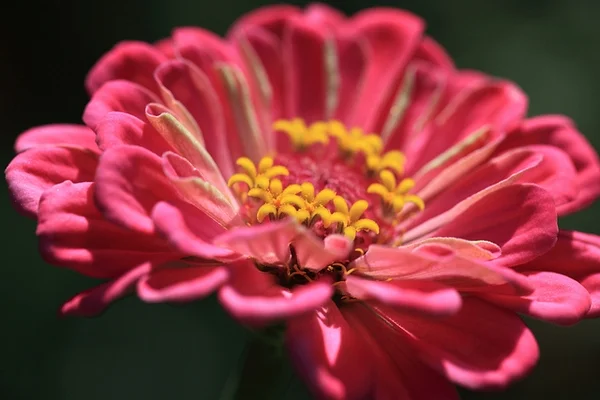
Choose a dwarf Zinnia elegans, rather than a tall cutting variety.
- 01
Read the mature-size label
Choose a compact cultivar for this one-pot plan.
- 02
Plant after frost
Keep the top of the root ball at the soil surface, fill around it, and water.
- 03
Give it sun and air
Avoid tucking it into a shaded, crowded corner.
- 04
Keep the display tidy
Cut faded blooms and remove damaged leaves. Water below the foliage.
Another way to start
Grow from seed+
For this pot, choose a compact variety such as Thumbelina. After frost, sow 2 seeds ¼ inch deep at the center. Keep the surface moist; once seedlings have two sets of leaves, snip the weaker one. At 70–75°F, sprouts often appear in 7–10 days.
When to water.
Check every morning. If the top inch of mix is dry, water at the soil surface until drainage begins. Leave a damp pot alone and empty its saucer.
Exactly what to feed it.
No added fertilizer at planting with the enriched mix listed here. It feeds for up to 2 months; continue only if your growing season runs longer and the plant is actively growing.
A SPECIFIC US PRODUCT
Miracle-Gro Water Soluble All Purpose Plant Food (US 24-8-16)
Mix 1½ tablespoons of the US 24-8-16 product in 1½ gallons of water. Use at the roots every 14 days after the starter feed runs out. Apply only enough to wet the pot, and let excess drain.
Check the manufacturer’s product page ↗Use the named US formulation. A different product or concentration needs different directions. The amount mixed is a batch, not a dose to pour into one pot.
A little patience pays off.
A budded nursery plant is the fastest route to color. Flowering from seed varies with the cultivar, so use the seed packet’s estimate.
When should I start where I live?+
Wait until frost risk has passed. Choose disease-resistant cultivars where summers are hot and humid.
For regional planting windows, find your local Cooperative Extension office ↗.
Something looking off?
Why is there a white coating on the leaves?+
Powdery mildew is one possibility. Check the plant carefully, improve airflow, and remove badly affected foliage; do not assume more water or fertilizer will solve it.
Can I grow a tall cutting zinnia in this pot?+
This recipe is for a compact plant. Tall cultivars need more room and may need support.
Are all zinnias native plants for my area?+
No. Zinnia elegans has Mexican origins. Native-plant choices depend on your own region.
A little more growing know-how.
Choose for your space+
Zinnias range from dwarf forms to tall cutting flowers. Start with the mature size, then choose the color you enjoy.
For a longer display+
Give the plant bright sun, open air, and good drainage. Deadheading suits many common zinnias, while some hybrid series are bred to keep blooming without it.
BEHIND THIS GUIDE
Where the advice comes from.
Plant care is based on the sources below. Planting layouts and beginner routines combine that guidance into one practical plan; they are editorial choices, not results from a Plant Care Steps growing trial.
- NC State: zinnia identity, varieties, and growing conditions ↗
- Burpee: zinnia seed-starting directions ↗
- Burpee: Thumbelina container variety ↗
- Illinois Extension: container nutrition ↗
- Manufacturer: US fertilizer formula and application directions ↗
- Manufacturer: starter feed in the named potting mix ↗
Compiled with AI assistance. These first-edition guides have not yet had an independent horticultural review. Read our editorial approach.