YOUR SIMPLE GROWING PLAN
One pot. Here’s the plan.
Indoors, near a bright window away from heaters. Start with nursery plant.
Start with a draining 4–6-inch pot. Repot only when needed, after flowering.
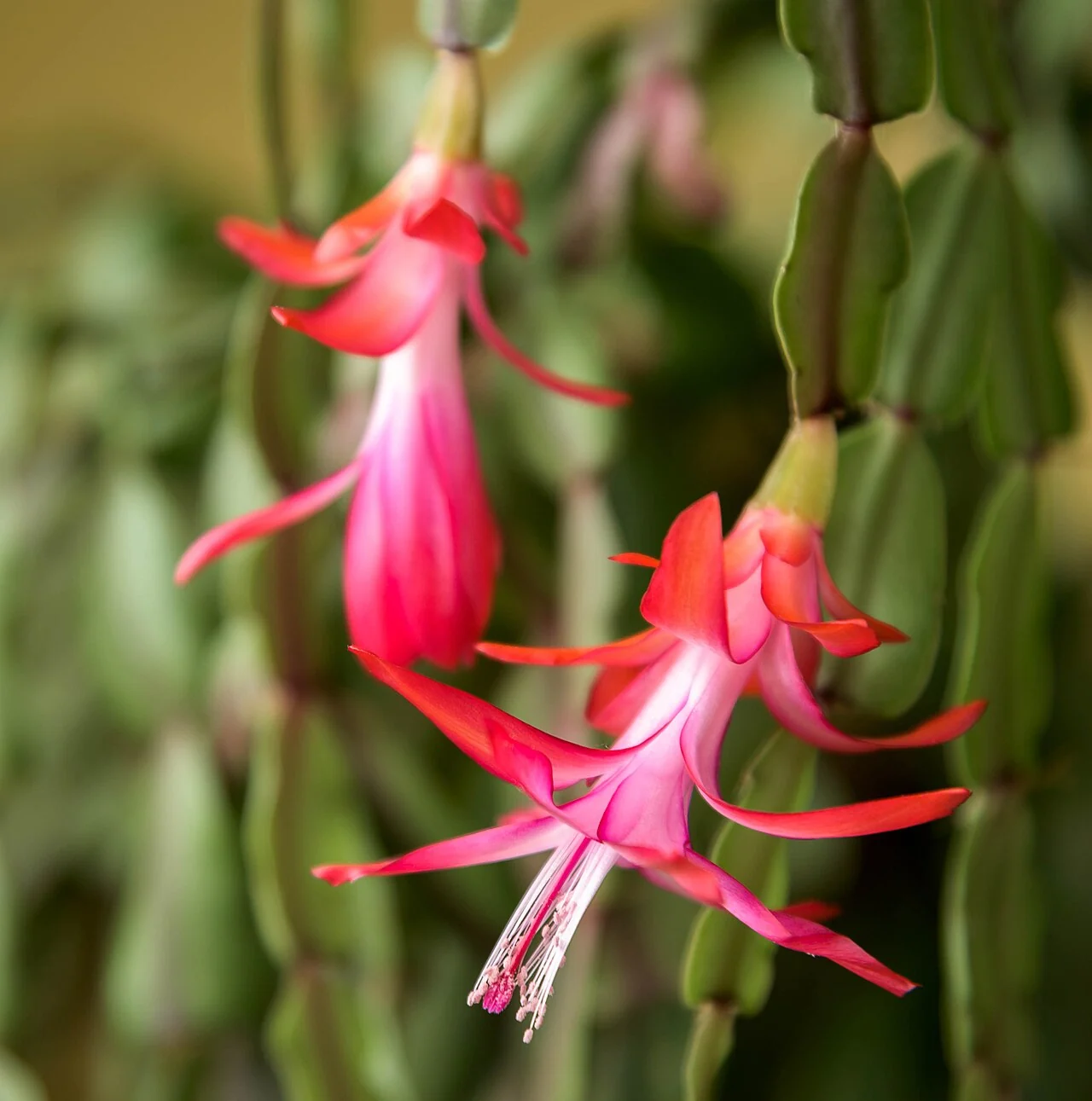
Rounded, scalloped stem edges help identify Christmas cactus.
- 01
Keep the working pot
Remove any sealed gift wrapper around the bottom. Place the draining nursery pot on a saucer; leave a flowering plant in its current pot.
- 02
Find a steady bright spot
Use filtered daylight, away from a hot radiator or a drafty doorway. Keep the position steady while buds develop.
- 03
Feel before you water
Check the surface twice a week as a reminder. Water when the surface has started to dry; wait if the mix is still wet.
- 04
Water, drain, and enjoy
Wet the mix slowly until water comes out underneath. Empty the saucer. Remove spent flowers gently and let the plant keep growing after the holiday.
Another way to start
Root a short stem cutting+
Take a healthy piece with 2–3 joined segments. Let its cut end dry in shade for 2–3 days, then insert the lower end in a small draining pot of moist perlite or airy potting mix. Keep it in bright indirect light with the medium lightly moist, not soaked. Roots may form in about 2–3 weeks; wait for established growth before feeding.
When to water.
Use a twice-weekly check, not a fixed watering day. When the surface feels dry and the pot is lighter, water thoroughly and drain. Keep some moisture below the surface during active growth and bloom; do not leave the entire root ball bone-dry for weeks. After flowering, slower growth usually means less frequent watering. A limp plant in wet mix needs a root and drainage check, not another drink.
Exactly what to feed it.
A newly bought plant may already contain slow-release fertilizer. Wait until that feed is finished. This simple routine uses a dilute summer feed and stops in September; extra fertilizer is not the first fix for missing flowers.
¼ TEASPOON PER US GALLON · MONTHLY IN SUMMER
Jack’s Classic All Purpose 20-20-20 (US)
Mix ¼ teaspoon of Jack’s Classic All Purpose 20-20-20 into 1 gallon of water. Apply at a needed watering once a month in June, July, and August while growing. This halves Jack’s ½-teaspoon periodic indoor rate, using Minnesota Extension’s half-strength summer schedule. Use only enough solution to wet this pot and drain. Following Clemson’s seasonal pause, stop in September and through flowering; resume the summer routine when its season returns.
Check the manufacturer’s product page ↗Use the named US formulation. A different product or concentration needs different directions. The amount mixed is a batch, not a dose to pour into one pot.
A little patience pays off.
A healthy nursery plant can stay with you for many years. Buds and flowers follow seasonal light and temperature signals; they do not have to arrive on Christmas Day.
When should I start where I live?+
Start with a rooted plant indoors any time of year. For repeat bloom, aim for about 6 weeks of uninterrupted nights in fall: at least 12 hours of darkness, with nights around 60–65°F and bright days. Avoid a room where evening lamps keep lighting the plant. Never expose it to frost.
For regional planting windows, find your local Cooperative Extension office ↗.
Something looking off?
Is mine actually a Thanksgiving cactus?+
Pointed teeth on the flat stem segments usually indicate Thanksgiving cactus, Schlumbergera truncata. Christmas cactus has rounded scallops. Many shop plants are hybrids. Their basic care is similar, but their natural flowering dates differ.
Why is it dropping flower buds?+
A move, dry roots, waterlogged mix, or sudden changes in temperature can upset a budding plant. Check the mix and keep conditions steady. Do not respond with a stronger fertilizer dose.
Why does it stay green but never flower?+
Check evening light and nighttime warmth first. A constantly lit, warm living room can interrupt the autumn signal. The fall night routine above matters more than adding bloom fertilizer.
A little more growing know-how.
A forest cactus, not a desert cactus+
Its ancestors grow in forest habitats. Filtered light, airy roots, and moderate moisture suit it better than fierce sun and prolonged drought.
The easiest way to make another plant+
Use a short joined stem, not seed, for a practical home start. Keep the little cutting separately until it roots so its moist rooting mix does not change the watering needs of the parent pot.
BEHIND THIS GUIDE
Where the advice comes from.
Plant care is based on the sources below. Planting layouts and beginner routines combine that guidance into one practical plan; they are editorial choices, not results from a Plant Care Steps growing trial.
- University of Minnesota: half-strength summer feeding and flower-bud conditions ↗
- Wisconsin Extension: cactus identity, drainage, and stem cuttings ↗
- Clemson Extension: rainforest cactus care and September feeding pause ↗
- Manufacturer: US fertilizer formula and application directions ↗
Compiled with AI assistance. These first-edition guides have not yet had an independent horticultural review. Read our editorial approach.