YOUR SIMPLE GROWING PLAN
One pot. Here’s the plan.
Indoors, in bright indirect window light. Start with small plant.
Start with a draining 4–6-inch nursery pot and a saucer.
Choose a healthy compact plant; varieties differ in mature size.
- 01
Keep the inner pot
Place the draining nursery pot on a saucer or inside a decorative pot. Empty any collected water instead of letting the roots stand in it.
- 02
Choose soft window light
Set it near a bright window, out of harsh direct sun. Give the leaves room and avoid blasts from heating or cooling vents.
- 03
Check before it droops
Every 3–4 days at first, feel the top inch. Water as that layer becomes dry while the mix below is still lightly moist.
- 04
Water and let it drain
Water the mix slowly until a little exits the holes. Let it finish draining before returning it to its outer pot.
Another way to start
Divide a mature clump+
During a needed repot, separate a section with its own roots and several leaves. Plant it at its previous level in a small draining pot of fresh mix and keep it lightly moist in indirect light. A cut leaf alone is not a reliable substitute for a rooted division.
When to water.
Use a 3–4-day reminder to check the pot. When the top inch becomes dry, water thoroughly while the deeper mix is still lightly moist. Wait if the surface is damp. Do not use repeated wilting as the normal cue, and do not add more water to a drooping plant until you have checked whether its mix is already wet.
Exactly what to feed it.
Skip extra fertilizer while a new nursery plant’s existing feed remains active. Peace lilies need much lighter feeding than the product’s general houseplant schedule.
¼ OF THE PRODUCT’S INDOOR STRENGTH
Miracle-Gro Water Soluble All Purpose Plant Food (US 24-8-16)
Mix ⅛ teaspoon of the US 24-8-16 product into 1 gallon of water. Feed at a needed watering every 6–8 weeks during active spring or summer growth. This is one-quarter of the product’s ½-teaspoon indoor rate, adapted from Clemson’s light-feeding guidance. Use only enough to wet the pot and drain. Skip while growth has paused; do not add an extra watering just to meet a feeding date.
Check the manufacturer’s product page ↗Use the named US formulation. A different product or concentration needs different directions. The amount mixed is a batch, not a dose to pour into one pot.
A little patience pays off.
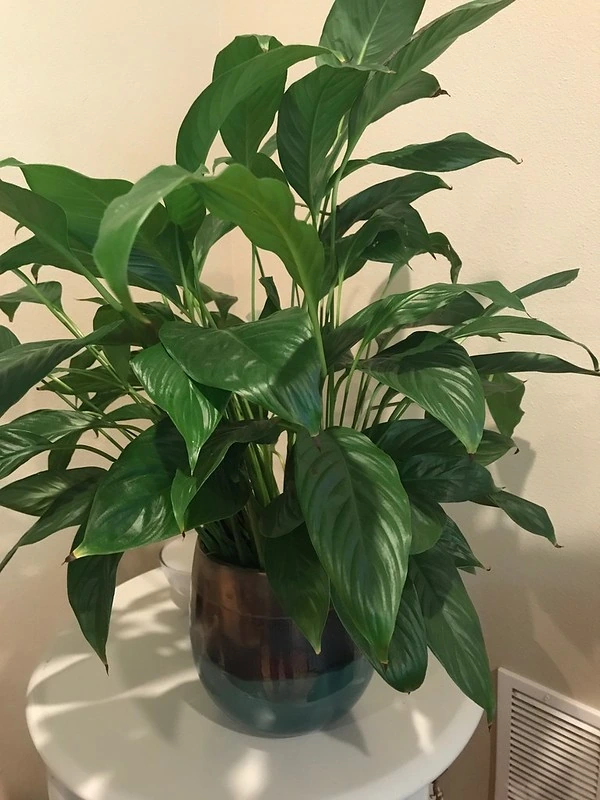
New leaves gradually fill out the clump. Flowering depends on maturity and light; it is not guaranteed every month. White flower covers can turn green as they age.
When should I start where I live?+
Start indoors year-round in a warm room. Keep it away from cold drafts. Stronger seasonal growth is a better reason to feed than a date on the calendar alone.
For regional planting windows, find your local Cooperative Extension office ↗.
Something looking off?
Why is it drooping?+
Feel the mix first. A dry root zone needs water; a wet pot needs drainage checked. The same droop does not always mean the same problem.
Why are the leaf tips brown?+
Review feeding and repeated drying. Brown tissue will not turn green again, so look for healthy new growth after improving care.
Why are there no flowers?+
A young plant or a dim spot may not flower. Try brighter indirect light gradually. More fertilizer is not a substitute for light or maturity.
A little more growing know-how.
Repot one small step at a time+
When roots crowd the pot or watering becomes difficult to manage, move to one just 1–2 inches wider. Keep drainage holes and the existing planting level.
Choose for the leaves too+
Healthy foliage is a useful sign of progress between blooms. Cultivars range from compact to very large; a small nursery pot does not guarantee a permanently small plant.
BEHIND THIS GUIDE
Where the advice comes from.
Plant care is based on the sources below. Planting layouts and beginner routines combine that guidance into one practical plan; they are editorial choices, not results from a Plant Care Steps growing trial.
- Clemson Extension: peace lily care and quarter-strength feeding ↗
- Iowa State: houseplant watering and existing nutrients ↗
- Iowa State: propagation by division ↗
- ASPCA: peace lily species record ↗
- Manufacturer: US fertilizer formula and application directions ↗
Compiled with AI assistance. These first-edition guides have not yet had an independent horticultural review. Read our editorial approach.